July 2025

Get Prepared to Own the Outcomes with SNAPP Group

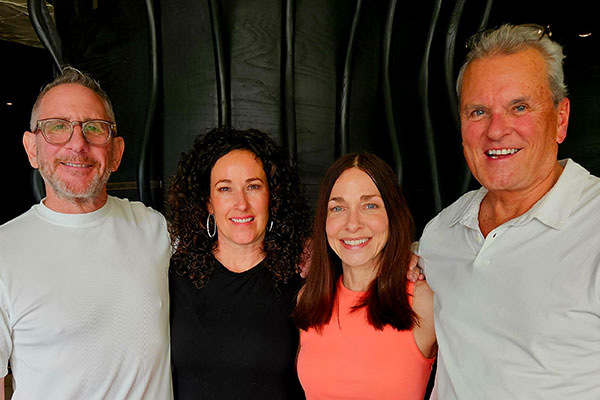
Board members (l-r): Ken Kopolow, OD; Milissa Stone; Lisa Hamilton, OD; and Richard Hults, OD
By the SNAPP Board

The world is quickly changing around us. As you find yourself wondering what the impact on your business will be, it’s time to be proactive. When you join us at our 2025 meeting in Clearwater on November 2-5, we will map out a plan together to be prepared.

Our theme for this year’s meeting—Owning the Outcomes, From Accountability to Action—details all the steps along the way.

You’ll hear from featured speaker Ryan Parker, OD, on what the future looks like and how AI will shape the future of eye care. Dr. Parker, Senior Director of Medical and Professional Affairs at EssilorLuxottica, will deliver compelling, practical insights as he addresses The Landscape of the Optical Business, Today and Tomorrow. Dr. Parker brings his experience from his leading role in shaping professional education, innovation adoption and clinical engagement across the eye care industry to our conference.

Scot Morris, OD, FAAO, will provide 2 COPE CE hours on the AI in Eye Care conversation. This course promises to demystify AI and reveal how AI and AMI will fundamentally reshape eye care delivery—from your front desk to diagnostic capabilities and patient education. Prepare for a witty, interactive and perhaps controversial journey into the future of eye care. The biggest threat isn't AI, it's ignoring it!


Scot Morris, OD, FAAO

Take the steps to prepare for the future of your business. From our live sessions to networking conversations with your colleagues and beyond in the exhibit hall, the SNAPP Group 2025 Meeting is sure to give you the takeaways to plan for a successful future in your business.

We’re just four months away, so register today! We look forward to seeing you at the JW Marriott Clearwater Beach Resort and Spa.

Advocacy

Highlights from Optometry's Meeting 2025

Optometry’s Meeting 2025 kicked off on June 25 in Minneapolis for the 128th American Optometric Association (AOA) Congress and 57th American Optometric Student Association (AOSA) Conference. The meeting revealed the debut of the AOA Innovation Hub, where tech innovators and optometric leaders convened for a three‐part panel on AI-enabled tools, workflow challenges and emerging treatment technologies. Minnesota Optometric Association President Tommy Elton, OD, and AOA President Steven Reed, OD, shared remarks highlighting the recent scope-of-practice victories in 14 states. World Council of Optometry President Sandra Block, OD, and AOSA President James Chung underscored lifelong learning and student leadership, and Richard Edlow, OD, presented a data-driven look at factors shaping Americans’ access to eye care.

The assembly also unveiled Leadership Institute 2.0, an exclusive, three-day in-person workshop in Washington, D.C., designed to deepen participants’ change-leadership and media-training skills before AOA on Capitol Hill. With only 50 seats available, this advanced professional development experience aims to empower optometrists to drive policy, advocacy and innovation at the highest levels of the profession. Other highlights included a call-to-action request from Jennifer Kohn, OD, to the House of Delegates to give, to act and to lead by joining the AOA-PAC team, as well as a presentation of a new AOA report on the ocular risks of GLP-1Ras by Andrew Morgenstern, OD.


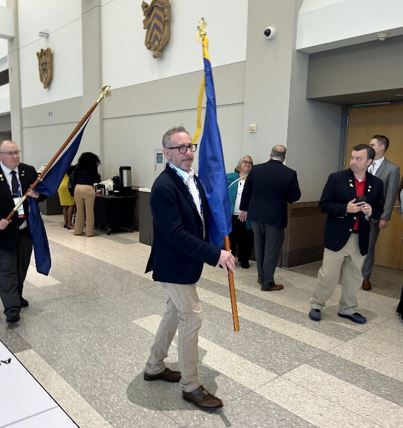
Ken Kopolow, OD, represented Nevada at the American Optometric Association’s House of Delegates last month in Minneapolis.

AOA Trustee Marrie S. Read, OD, MBA, presented the Membership Excellence Award at the AOA House of Delegates, recognizing the Delaware Optometric Association, Nevada Optometric Association and Virginia Optometric Association for their exceptional membership growth. This marks Delaware's second consecutive win. Nevada achieved a double-digit membership increase and substantial market share gain, while Virginia also saw significant growth.

SNAPPMastermindsGroup

Enhancing Profitability and Collaboration Across Locations

Edward Santos

Edward Santos, the COO of The Eye Health Group with eight Pearle Vision locations in New Jersey and one in New York, was interested in connecting with other multiple-location operators when he decided to join the SNAPPMastermindsGroup in 2023. “I wanted to see what systems they use, and how they are able to work alongside Luxottica to be as profitable as possible.”

The in-person and virtual gatherings for SNAPPMastermindsGroup continually offer valuable takeaways, Santos says, from the educational course content to conversations over dinner with colleagues. “I always bring something back and implement it in my business.”

One of the most recent benefits was securing a great deal on new OCT equipment when a group of SNAPPMastermindGroup members purchased together. “We were able to exert our group buying power for a better discount.” He’s also looking to implement using RFID technology with his office’s inventory system. “We can do multiple inventories throughout the month instead of once a quarter,” he says, which offers better control over the inventory and efficiencies throughout all locations.

The SNAPPMastermindsGroup chat is a great tool any time he has a question or needs an opinion. “I throw it up on the chat, and I always offer assistance when other people ask a question. It’s a great way to share resources.” He’s thankful for these relationships built with people from across the country. “You get a different viewpoint of how the business runs, and I find that’s been an excellent resource for me.”

Compliance Update

Important HIPAA Update: Part One

Privacy Rules Update

By Practice Performance Partners (PPP)

As expected, 2025 will bring about massive changes in the HIPAA Privacy and Security Rules. All of these changes are nearing the end of the comment period and will almost certainly need to be implemented by the end of 2025. There are moderate changes to the privacy standards and very significant changes in the security standards. In Part One, we will cover the changes to the Privacy Rules.

MEDICAL RECORD ACCESS

Most changes to HIPAA over the past decade have been attempts to strengthen regulations ensuring transparency and access to medical records. The current changes also include a landmark rule creating a special protected health information (PHI) class with additional privacy for certain restricted information.

• Failure to provide rapid access to medical records is one of the most common HIPAA complaints against optometrists. The new rule sets the timeline for record requests at 15 days, overriding any state law with a longer allowed period. PPP recommends you strive for immediate access whenever possible. Electronic medical records take little to no effort to release and delaying information is only an inconvenience to the patient. Release of records to a patient may occur ONLY through encrypted email, encrypted text, patient portals or live. You can still obtain individual authorization from each patient to release their records through unsecured channels, but this option is complex and fraught with additional recordkeeping issues.

• Release of records directly to the patient or their designee does not require signed patient authorization and is actually discouraged by HHS. While always an assumed policy, the new rule finally clarifies this issue.

• Covered entities must ensure that patients and individuals or entities designated by the patient may obtain full access to their medical records at no charge. There are no stated exceptions to this rule change.

• Patients may view their medical records, take notes and capture images on their personal devices (specifically smartphones). This includes diagnostic test results. You may still limit this to a scheduled time when there can be staff oversight.

• More latitude for medical records release for military personnel. Several times, clients have asked if they can release medical information to military superiors without authorization from the patient. The past rules implied that formal acknowledgment was not necessary, but the new rules clarify that patient acknowledgment is not required.

The Department of Health & Human Services (HHS) is also reviewing potential changes that will provide even more ability for the patient to direct when and how they want their medical information shared. These changes are expected to be accompanied by the implementation of the 24/7 record access requirement. PPP will keep you updated as these rules are implemented.

PROTECTED INFORMATION CLASSES

HHS has designated new data types that have more restricted access. This is stated by HHS to be due to changes in our current socio-political climate.

• Any care related to Substance Use Disorders (SUD) is now fully protected as PHI. An interesting HIPAA twist, but before this rule change, SUD information was not included in the HIPAA data set. Current or past SUD is now considered part of the medical record and falls under all the protection and release rules of other PHI.

• Reproductive Health Information (RHI), including all procedures, contraceptive use and related treatments, is now considered a separate data classification (unique PHI). The standard exclusion of certain privacy rules related to treatment, payment and operations (TPO) no longer apply to RHI. This is only the second time specific health care information requires more complex protection and release rules (the other being mental health records). Under the new rules, any information related to reproductive health history or decisions may not be released to courts or officers of the law. Additionally, such PHI should not be included in a standard medical release unless the provider determines that the inclusion of such data is necessary for the continuation or coordination of care for the patient. How much leniency a provider has in making this determination is vague. To be safe, we recommended that providers obtain a signed release specific to reproductive health data whenever the medical record includes such information. You may also simply remove the information from the record. Another consideration is the necessity of including any RHI in the patient’s medical history. Unless such information is essential to the care of the patient, simply not collecting such data solves all of the complications related to this new rule.

PPP has already made changes to some of the privacy information and rules in the HIPAA package but will add more over the year as the comments and interpretation of the new rules potentially become clearer.

Questions on the new privacy rules can be directed to info@practiceperformancepartners.com.

News of Interest

Good Cholesterol Molecule Shields Aging Eyes

New WashU Medicine research reported in Science Daily finds that increasing apolipoprotein M (ApoM), a protective molecule that regulates cholesterol, halts retinal cell damage in mouse models of age-related macular degeneration. By clearing harmful lipid deposits under the retina, ApoM therapy preserves light-sensing cells, offering a promising strategy to slow or prevent vision loss. Read more here.

Diabetes Associated With More Severe Tear Film Instability Among Patients With Dry Eye

A study, which was reported on in International Ophthalmology, found that “individuals had more severe tear film instability, orifice plugging and lid margin abnormalities if they had type 2 diabetes and dry eye compared with those who had dry eye alone.” The study involved 302 eyes from 151 patients who were diagnosed with DED compared ocular surface parameters between DED-DM and DED groups. Researchers observed that “median (range) of upper lid margin irregularity, lid margin vascularity, lid margin thickening grade, ciliary hyperemia, plugging of gland orifices and upper meibomian gland dropout were higher in the DED-DM group compared with the DED group.” Read more here.

Every Story Counts

The International Agency for the Prevention of Blindness launched its 2025 World Sight Day campaign on July 1. The #LoveYourEyes campaign will focus on telling individual stories with a theme that Every Story Counts. Have you heard a meaningful story of saving vision from within your business? Share your story here.


Photo credits—Getty images: recap: Vasilevskiy Sergey; act now: Oleksandr Hruts; aging eyes: fizkes; news: MF3d

•  Connect with us on Facebook and LinkedIn  •

Visit snappgroup.org to learn more about SNAPP.